Residential stink bug control targets the brown marmorated stink bug, an invasive agricultural and domestic pest originally documented by the United States Department of Agriculture in eastern Pennsylvania during the…
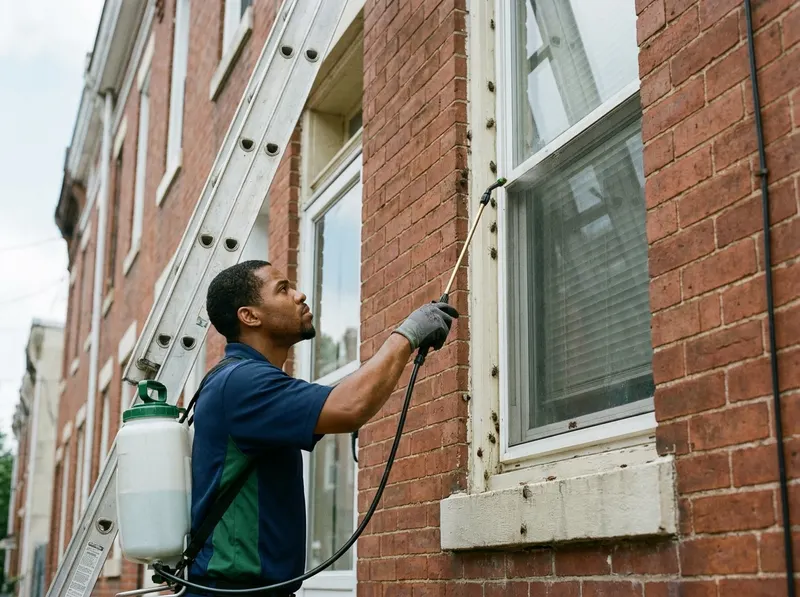
Residential stink bug control targets the brown marmorated stink bug, an invasive agricultural and domestic pest originally documented by the United States Department of Agriculture in eastern Pennsylvania during the late 1990s. In dense urban and historic neighborhoods such as Chestnut Hill, Mount Airy, and Passyunk Square, these insects congregate on warm south- and west-facing building facades during September and October. The primary objective is preventing insects from entering wall voids and structural framing, where they remain dormant until unseasonably warm winter days or spring trigger indoor emergence. The Penn State Extension notes that physical exclusion remains the most sustainable defensive measure, as interior chemical sprays do not eliminate dormant insects nestled inside wall cavities.
Treatment protocol begins on building exteriors using microencapsulated pyrethroid or non-repellent liquid residual barriers registered with the Environmental Protection Agency. Technicians apply targeted bands around window frames, door jambs, soffits, fascia boards, rooflines, and masonry weep holes. In historic brick facades common to Fishtown, Northern Liberties, and Queen Village, mortar degradation and window casing shrinkage create micro-gaps as narrow as 3 millimeters, ample clearance for an adult shield bug. Crestora Pest Defense utilizes silicone-based caulking, copper mesh, and pest-proof sweeps compliant with Pest Control Technology structural standards to seal these entryways permanently without damaging vintage masonry.
Choosing between exterior barrier exclusion and interior reactive removal depends on the season. Homeowners in Manayunk and Rittenhouse Square identifying insects crawling on drapes or light fixtures between December and March require low-odor contact botanical applications or HEPA-filter vacuum extraction, avoiding standard crush methods that release volatile trans-2-octenal odor compounds documented by the Entomological Society of America. Reactive interior extraction clears active adults, but true elimination requires late-summer preventative barrier work. Homeowners balance treating exterior building envelopes before autumn dispersion against recurring vacuum clearing throughout the heating season.
1. Exterior assessment: Technicians map sun-exposed brick, siding seams, chimney flashings, and attic louvers according to standards set by the National Pest Management Association.
2. Barrier application: Targeted micro-treatments cover foundation edges, second-story eaves, and siding transitions to halt vertical crawling.
3. Structural exclusion: Sealing utility line penetrations, attic vents, and window perimeters shuts out migrating populations following guidelines from the National IPM Centers.
4. Interior remediation: Non-toxic mechanical collection removes live overwintering insects from attic insulation and window wells without staining trim, referencing recommendations by the Pennsylvania Department of Agriculture.
Every job gets a firm, written price after a free on-site visit.
For standards, safe disposal, and service guidance on PEST CONTROL SEVICE in Philadelphia, PA, useful references include U.S. EPA, ENERGY STAR, U.S. Dept. of Energy, Consumer.gov, U.S. Census Bureau, and Google Maps. General consumer and small-business resources are available from USA.gov, Better Business Bureau, FTC Consumer Advice, U.S. Small Business Administration, and Ready.gov.
Tell us about your stink bug control job in Philadelphia and we'll send a clear, written quote, usually the same day.
 Crestora Pest Defense